

Linux
40 posts · 2019–2025

Ansible Loops
Loops in Ansible allow you to repeat a task multiple times with different input values.

UMASK: What is it?
In Unix-like operating systems, file permissions play a critical role in ensuring system security and proper access control.
Privilege Escalation: How a `remote_user` and a `become_user` works
One of its Ansible’s features is the ability to execute tasks with elevated privileges, often necessary for managing system configurations. This process is known as privilege escalation.
Target fs?
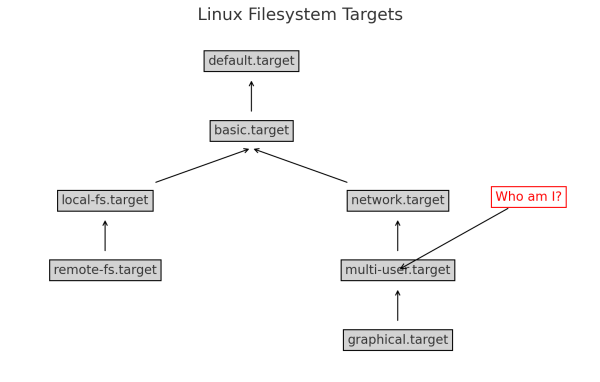
Linux, as an open-source operating system, has undergone significant transformations over the years.

What about `profile.d`
The /etc/profile.d directory, though seemingly simple, plays a vital role in the smooth operation of your Linux system.

Writing to a file in Linux deep-dive
Previously I gave a high level flow for how a process of simple file write looks like in a Linux environment here. In this blog, I will add more tech-details.

How a file write happens in Linux?
Writing to a file on a device in Linux involves a fascinating journey through different layers of the system.



Tunnel: SSH
SSH tunneling is a powerful technique that allows you to securely tunnel network traffic between two endpoints.
Ansible: Async & Poll
·3 mins
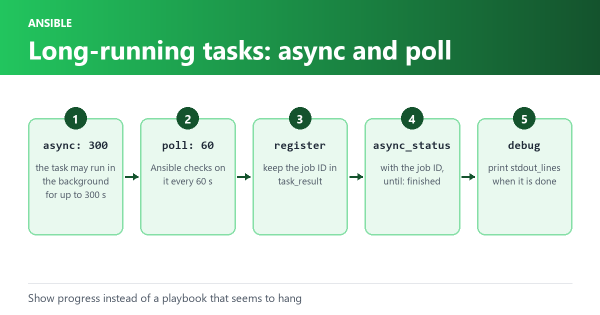
Ansible is a powerful automation tool that can be used to manage the configuration and deployment of a large number of systems. It has a rich library of modules that can be used to perform a variety of tasks, from managing files and packages to deploying applications and configuring network devices.
Scenario: Molecule
·3 mins
A scenario in Molecule is a configuration that defines how a role should be tested. It consists of a set of instructions and parameters that determine how a role is provisioned, converged, and verified. The purpose of scenarios is to allow for flexibility in testing a role by allowing multiple testing configurations to be defined and executed. You can have as many scenarios as you like and Molecule will run one after the other.
Ansible Variables
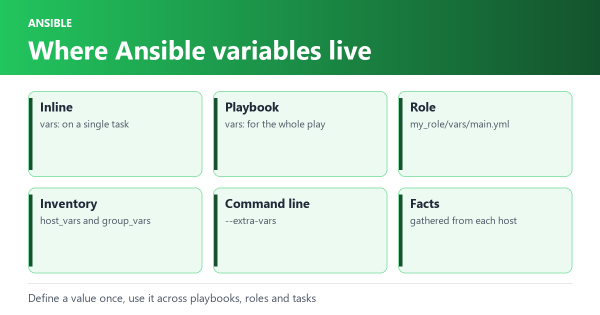
Variables are a crucial part of Ansible and are used to store values that can be used across playbooks, roles, and tasks.
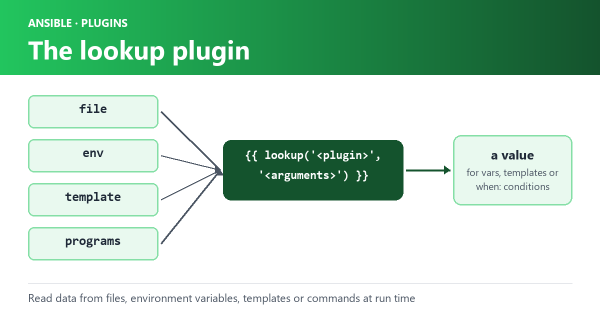
`lookup`: Ansible
Ansible’s lookup plugin allows you to access data from a variety of sources, including files, templates, and external programs.
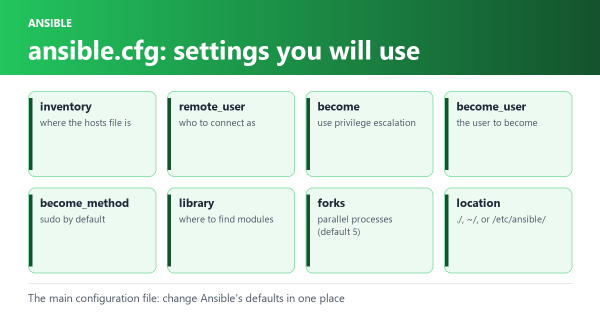
Ansible Configuration: `ansible.cfg`
·2 mins
The file can be placed in various locations, such as the current directory, user’s home directory, /etc/ansible/, and /etc/ansible/conf.d/.
Ansible: Variables
Ansible Variables are used to store values that can be reused throughout an Ansible playbook.
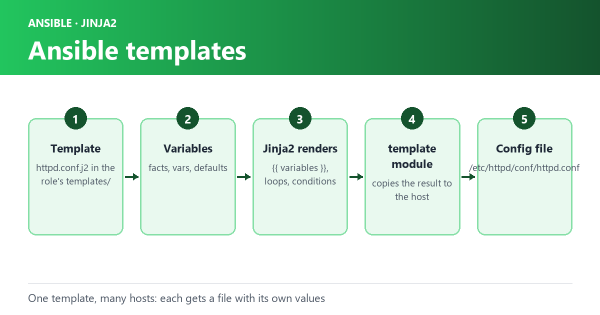
Ansible: Templates
Templates in Ansible are a type of file that contain configuration information or scripts written in a Jinja2 templating language.
Ansible: SSH Access
To set up SSH access for inventory hosts in Ansible, follow these steps:

Ansible: Building Inventory
An Ansible inventory is a file that defines the hosts and groups of hosts that Ansible will manage. Inventory files are used to define the nodes (hosts) that will be managed by Ansible.
Ansible: A thought
Ansible is an open-source software platform for automating and managing IT infrastructure.
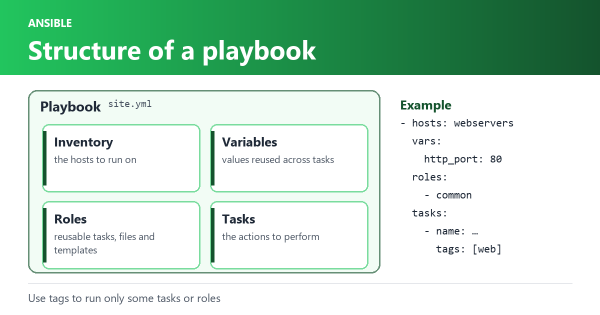
Ansible: Structure of a playbook?
The structure of an Ansible playbook includes the following elements:
Ansible: Refresher
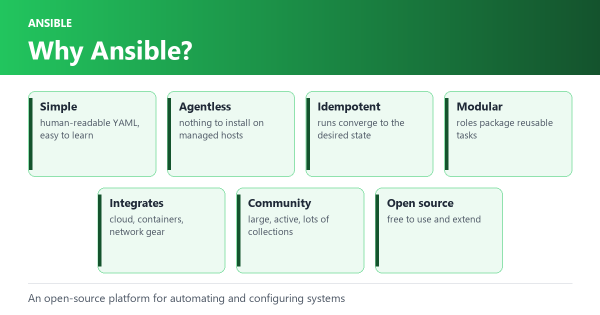
Ansible is an open-source software platform for automating and configuring computer systems.
Static IP’s in QEMU VM’s
·2 mins
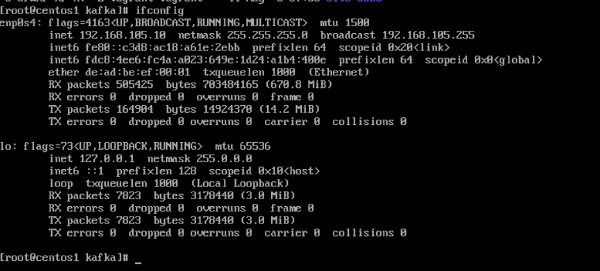
Continuing from where I left in the blog before. If you are using looking to configure a static IP for your machines (may be your use case is similar to mine) this blog might be useful for you.
Running QEMu based VM’s on OSX M1
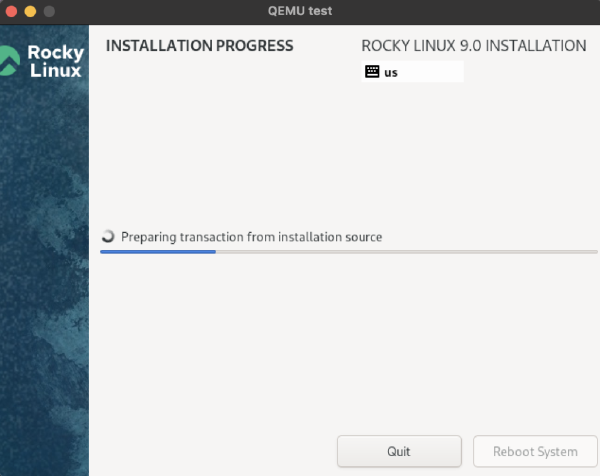
In this blog let’s try and look at some of the commands I used to build an RockyLinux machine on a MacPro M1.
Ansible: On Windows 10 Pro
·2 mins
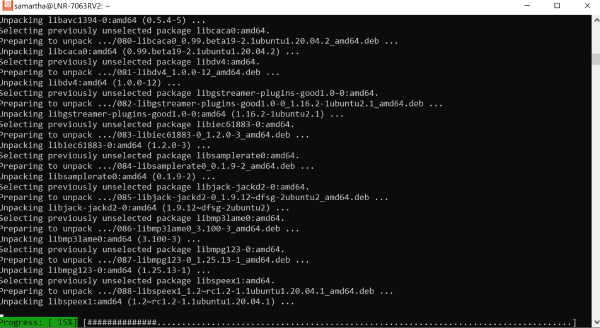
Life is bringing it own challenges as I have moved to the United States of America. One of the immediate tech challenge has been using the loaner windows box and still be productive.
ssh-keygen & ssh-copy-id
·2 mins
– The SSH protocol uses public key cryptography for authenticating hosts and users.
SSH Protocol
💬 What is SSH protocol?
💬 It is also referred to as Secure Shell, is a method for secure remote login from one computer to another. It is an alternative to telnet and rlogin
Notes: For self
Personal notes on Bash: arithmetic, = versus ==, single versus double brackets, and the bc calculator.
Zabbix Agent
In this blog I will walk you through basic steps needed to deploy a Zabbix 5 Agent on a Centos Machine. The Zabbix Release is available here.
Machine # root@node4>cat /etc/redhat-release CentOS Linux release 7.9.2009 (Core) Download and install the RPM

PS: Process Status
MAN Pages are one source of truth for all curious queries.
man ps Name ps - report a snapshot of the current processes. It is used to display instant information about the active processes in the system.
Kernel Mode
The CPU operates in two modes in Linux
User mode (non privileged mode) Kernel mode (System mode) When operating in Kernel mode it has un-restricted access to resources like memory and input output devices.
Linux Utils
Ping # I have used ping often but never to an extend that I could understand the complete range of options and power available at hand.
SYSTEMD: Mother of all processes
systemd is the replacement system for System V and with the primary goal of starting services in parallel.
Remember init levels?
GRUB: Grand Unified Boot Loader — /boot/grub/grub.conf Some key points