If you have ever seen this error, you know the pain of a fellow linux user.
The story of Linux containers is a tale of innovation and collaboration, with roots surprisingly deep in the history of the Linux operating system itself.
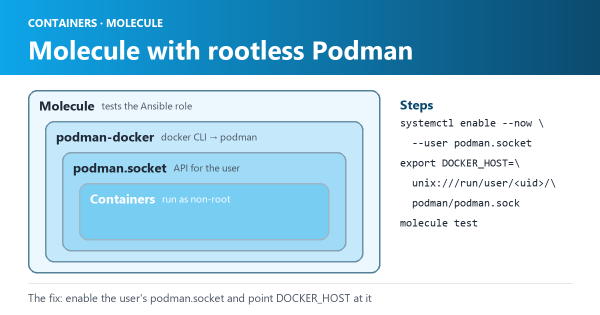
On my Centos8 I was facing issue when I was trying to run Molecule on a centos machine which is running podman as a non root user.
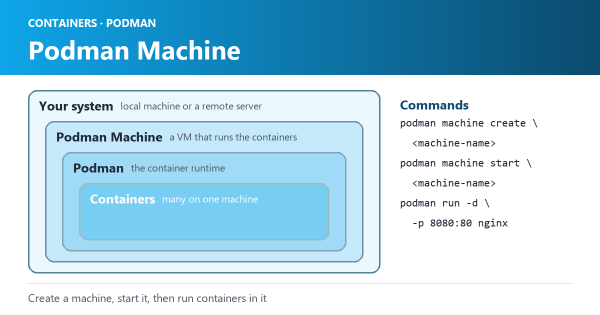
Podman Machine is a tool that allows you to manage multiple Linux containers on your local system or on remote servers.
Buildah is a command-line tool used for building and managing OCI-compliant images. It is an alternative to Docker Build that provides greater flexibility and control over the image building process.
In the previous blog, I was left with the error that had little information for me to debug. I realized since I migrated most of the files from my previous laptop it might be causing an issue.
Having just bought an M1 – MacBook Pro the issue are mounting. The premier challenge was to get my Vagrant boxes configured with provider virtualbox to run.
So to delete there was one hard hack way of cleaning it all
In this blog I will use kubectl to create a ClusterRole and a ClusterRoleBinding (refer to link)
{ "kind": "ClusterRole", "apiVersion": "rbac.authorization.k8s.io/v1", "metadata": { "name": "myclusterrole", "creationTimestamp": null }, "rules": [ { "verbs": [ "get", "list", "watch" ], "apiGroups": [ "" ], "resources": [ "persistentvolumes" ] } ] } k create clusterrole myclusterrole --verb=get,list,watch --resource=persistentvolumes k describe clusterrole myclusterrole You can use a ClusterRole to
define permissions on namespaced resources and be granted within individual namespace(s)
define permissions on namespaced resources and be granted across all namespaces
define permissions on cluster-scoped resources
Someone asked me to define a simple docker pod for the service I wrote in GOLang here. I completely forgot about it, till today.
So here is my first attempt at getting a docker image for the service.
Volumes are managed by Docker and is the preferred way of persisting, sharing data.
The storage driver allows your to create data in the writable layers of the container and it also controls how images and containers are stored and managed on the Docker host.
A Docker registry is a stateless, highly scalable server side application that stores and lets you distribute Docker images.
Docker registry is a central location that stores and distributes docker images. E.g. hub.docker.com is the default registry used when you are using docker pull.
I would move in stages, like a good learning guide always recommends.
Usually I use Centos, but this time I wanted to try out docker swarm and ubuntu was the preferred option due to the options and supporting blogs available.