Imagine you’re trying to find the best solution to a problem, but the problem is really complex and has a lot of randomness involved.
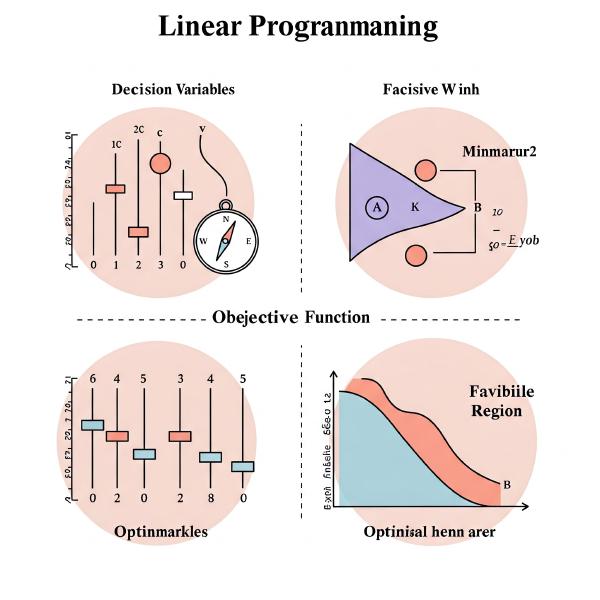
Linear programming is a mathematical technique used to find the best possible outcome (maximum profit or minimum cost) in a situation where the relationships between the factors involved are linear.
In the context of forecasting and business analytics, a model is a simplified representation of a real-world situation or process.
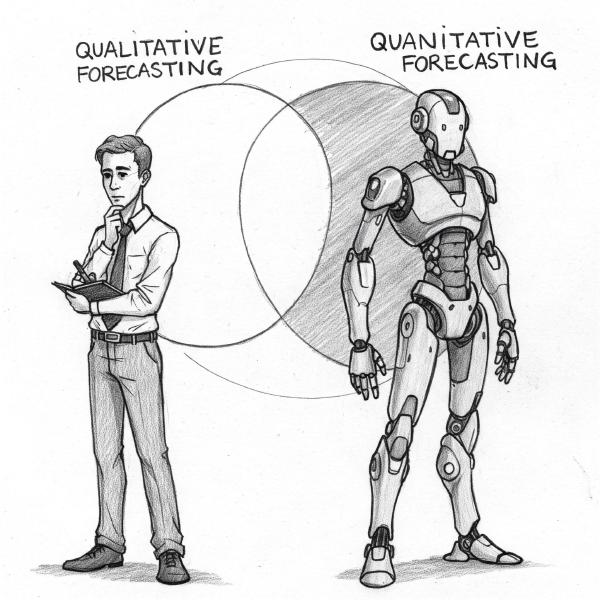
Forecasting methods are the techniques used to predict future outcomes based on past data and trends. They’re like having a crystal ball, but instead of magic, they use data and statistics!
How to tell which forecasting model is better: MAE, MSE, RMSE, MAPE, sMAPE, bias and Theil's U, explained with an ice-cream-sales example.
Imagine you’re a business owner trying to figure out why your sales are down. You could guess, or you could use business analytics.
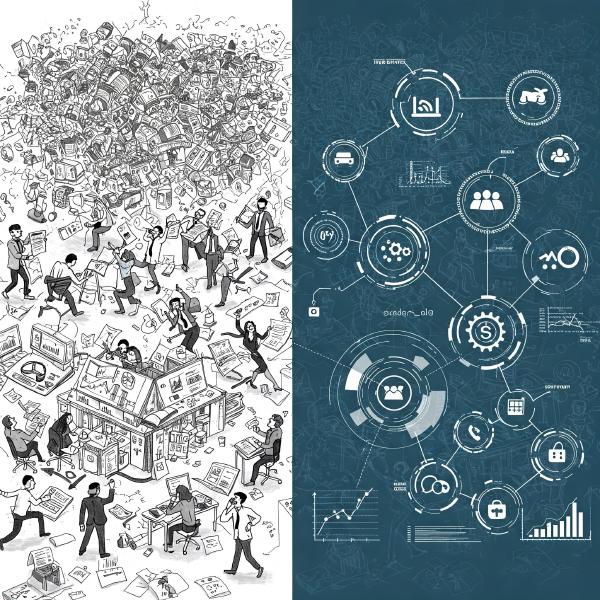
Business Analytics (BA) is like a GPS for businesses—it uses data to guide decisions, solve problems, and predict future outcomes.
From a Business Analytics perspective, understanding correlation and covariance is crucial for several reasons: